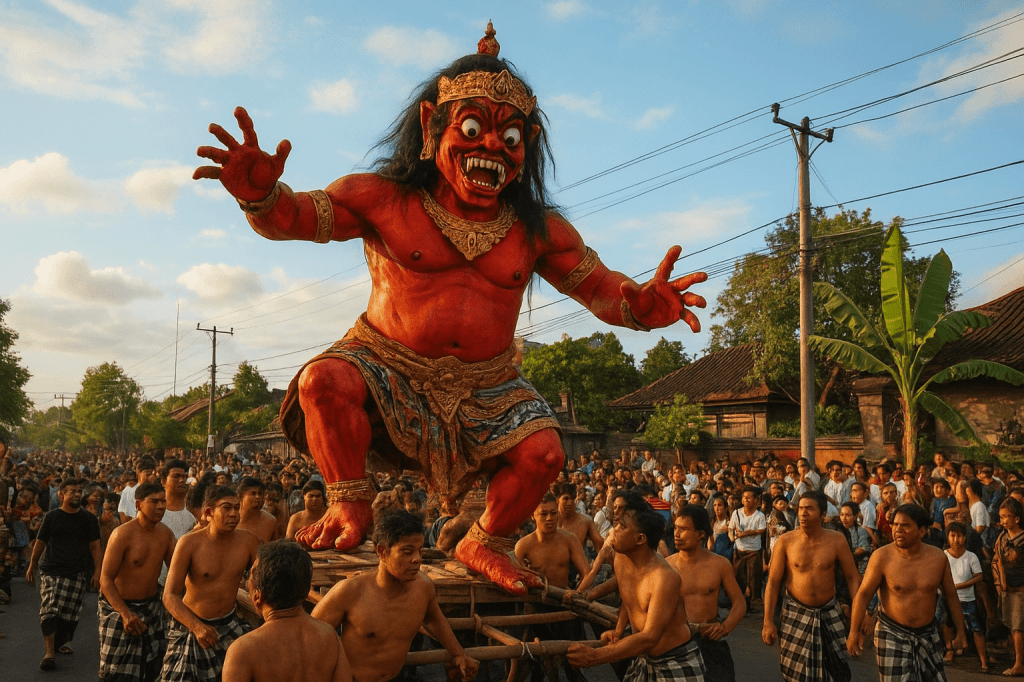
When people talk about traveling to Bali, they usually bring up rice terraces, beach clubs, and those infinity pools you see all over Instagram. But if you ever get the chance to attend Nyepi Day celebration in Bali, that experience will stick with you way more than sipping cocktails on Seminyak beach. Nyepi isn’t just another holiday—it’s the Balinese New Year, and instead of fireworks and loud music, the entire island goes quiet. And when I say quiet, I mean the airport shuts down, streets are empty, even Wi-Fi slows down because service providers limit signals. It’s not just a ceremony, it’s a full-on reset button for the entire island.
Read also: Where to Go in Indonesia
I remember the first time I stayed during Nyepi. I thought, “Cool, a quiet day, I’ll read a book and nap.” But then the night before, I got swept into the crazy Ogoh-Ogoh parade with giant monster puppets marching through the streets, drums echoing in my chest, kids running around with sparklers—it was wild. And then, the next morning, total silence. The contrast hit hard. It’s not just a holiday you watch; it’s one you feel.
So if you’re planning a trip and wondering if it’s worth timing it around Nyepi, let me walk you through everything I’ve learned—what happens before, during, and after, what you should (and shouldn’t) do, and little things that’ll make the day way more meaningful.
Why Nyepi Matters and What It Represents
Nyepi isn’t just a random day where everyone stays home. It’s tied deeply to Balinese Hindu tradition, marking the Saka New Year. The philosophy is simple but powerful: silence, reflection, and purification. According to Indonesia’s Ministry of Religious Affairs, Nyepi is one of the most important days in the Balinese calendar because it symbolizes harmony between people, nature, and the gods.
Balinese Hindus follow what they call the “Catur Brata Penyepian,” which are basically four rules of silence:
- No fire (that means no cooking smoke or bright lights).
- No work (businesses shut down).
- No travel (roads completely empty).
- No entertainment or pleasure (yep, Netflix bingeing is technically off the list).
Now, do all tourists follow this strictly? Not exactly. Hotels usually let guests move around inside the property, some kitchens prepare meals in advance, and honestly, no one’s going to break down your door if you watch a movie on your laptop with headphones. But if you step outside during the day, you’ll definitely get stopped by the pecalang (community guards) who make sure the island honors the rules. And honestly, breaking the silence feels disrespectful when you see how much effort the locals put into this day.
The Days Leading Up to Nyepi—Ogoh-Ogoh and Rituals
The build-up to Nyepi is just as fascinating as the day itself. A few days before, there’s Melasti, where locals dress in traditional white clothes and walk in processions to the sea, carrying temple heirlooms for purification. If you’re lucky enough to witness it, the sight of hundreds of people wading into the ocean while chanting is goosebumps-level powerful.
But the night before Nyepi? That’s when things get loud—like, ear-shaking, chest-thumping loud. This is the Ogoh-Ogoh parade, where villagers carry massive demon-like statues made from bamboo and paper mâché. These “monsters” represent evil spirits, and after being paraded through town with gongs, drums, and firecrackers, they’re burned to cleanse negative energy.
I still remember standing in Ubud’s main street watching a 20-foot-tall Ogoh-Ogoh sway side to side while teenagers lifted it on bamboo poles. The crowd cheered, little kids covered their ears from the drums, and at one point the puppet’s arm almost smacked into a power line. For a moment, it felt like controlled chaos. Then, just as quickly, everything was gone—by sunrise, silence covered the island.
If you plan to see the parade, go early. Streets get packed, and the best spots are around main crossroads like Puputan Square in Denpasar or central Ubud. Bring cash because vendors sell snacks and drinks before the silence kicks in, and trust me, you’ll want water after being in the heat with the crowd.
What It’s Like During Nyepi
Here’s the thing—describing Nyepi doesn’t really do it justice. The day itself feels… different. You wake up and the island is quiet in a way you’ve probably never experienced. No scooters, no construction noise, not even the buzz of a beach club in the distance. At night, the sky is insane. With no lights allowed, the Milky Way pops out, and you realize how much light pollution usually blocks it.
Most hotels prepare ahead by giving guests boxed meals or limited menus since kitchens have to scale back. Pools are open, so you can swim, read, journal, or just nap the day away. Some places even run yoga or meditation classes indoors, which fits perfectly with the spirit of reflection.
A little warning though: don’t expect to sneak out for a night stroll. The pecalang patrol the streets, and even tourists are expected to respect the silence. It’s actually kind of humbling to see how the community enforces this with seriousness but also friendliness—they’ll stop you, smile, and just say, “Please respect Nyepi.”
Tips for Travelers Attending Nyepi in Bali
I’ve learned a few things the hard way, so let me save you the hassle.
Stock Up Beforehand
Shops close, delivery apps stop working, and you won’t be able to run out for snacks. Buy water, fruit, or whatever comfort food you like the day before.
Book Accommodation Early
Hotels often sell out because visitors specifically come to experience Nyepi. If you want a place with a pool, book weeks (or even months) in advance.
Embrace the Quiet
It might feel weird at first not to check your phone constantly, but honestly, it’s a rare chance to unplug. Bring a book, journal, or even art supplies. Some people say Nyepi feels like a digital detox retreat you didn’t know you needed.
Respect the Rules
This isn’t one of those “tourist rules” that locals overlook. Everyone follows it. Even the airport shuts down—flights stop completely for 24 hours. So don’t try to sneak out; instead, lean into the silence.
What Happens After Nyepi
The day after is called Ngembak Geni, and it’s like flipping a switch. Streets come alive again, kids laugh outside, and families visit each other to forgive past mistakes. It’s a reminder that Nyepi isn’t just about silence; it’s about starting the new year with a clean slate.
For tourists, it’s a fun day to go out and explore because temples are lively, and markets feel festive. If you’re staying in Ubud or Denpasar, check out the smaller community celebrations where families cook together. It feels personal, like being let in on a family reunion.
Is It Worth Planning Your Trip Around Nyepi?
If you want Bali for beach clubs and nightlife, you might feel frustrated being “stuck” in your hotel for 24 hours. But if you’re curious about culture, spirituality, or just experiencing something unique, Nyepi is one of those once-in-a-lifetime opportunities.
Flights may be a bit tricky since the airport closure affects schedules, but many travelers agree it’s worth adjusting plans. Honestly, I’d even say it adds depth to your trip. Anyone can visit a temple or try Balinese food, but not everyone can say they were there when the whole island took a collective breath.
FAQs About Attending Nyepi in Bali
Can tourists go outside during Nyepi?
Nope. You have to stay within your hotel or villa. Only emergency services are allowed on the streets.
What about electricity and internet?
Electricity stays on, though lights should be dimmed. Internet is slower because providers restrict it, but basic access works.
Are restaurants open?
Only in hotels, and usually with limited options. Everything else is closed.
What if I arrive on Nyepi Day?
You can’t. The airport shuts down completely, including arrivals and departures. Plan your flights carefully.
Is Nyepi only in Bali?
It’s primarily a Balinese Hindu tradition, so Bali observes it most visibly. Other Hindu communities in Indonesia mark it too, but not with the same full-island shutdown.
Why Nyepi Stands Out Compared to Other Festivals
I’ve been to Songkran in Thailand (water fights everywhere) and Holi in India (color powder flying in every direction). Those are joyful chaos. Nyepi is the exact opposite—it’s about stillness, and that’s what makes it powerful.
There’s something grounding about being forced to slow down. No distractions, no obligations, just you and your thoughts. Some travelers say it feels like a spiritual retreat even if you’re not religious. I’d agree. I ended up journaling way more than I expected and realized I hadn’t sat still like that in years.
Best Places to Stay for Nyepi
Choosing where to stay can change how you experience Nyepi.
- Ubud: Perfect if you want a spiritual vibe with yoga retreats and rice field views. Many resorts offer meditation sessions on Nyepi.
- Seminyak or Canggu: These usually feel busy, but during Nyepi they become surprisingly peaceful. Villas with private pools are popular here.
- Nusa Dua or Jimbaran: Resorts in these areas tend to pamper guests with indoor activities, so it feels more like a holiday even while you’re indoors.
I once stayed in Ubud during Nyepi, and it felt like the silence amplified the natural sounds—frogs croaking, wind through palm trees. Another year, I stayed in Seminyak, and while it was quieter than usual, it didn’t have that same jungle vibe. Depends on what you’re looking for.
Final Takeaway on Experiencing Nyepi
Attending Nyepi isn’t about ticking off a tourist activity. It’s about experiencing something rare—an island choosing silence together. It’s cultural, spiritual, and honestly, kind of necessary in today’s noisy world.
If you get the chance to time your trip to attend Nyepi Day celebration in Bali, don’t hesitate. The parades, the silence, the stars at night, and the explosion of energy the next day—it’s something you’ll remember long after your tan fades.
How Tourists Can Show Respect During Nyepi
One thing I’ve noticed over the years is that locals really appreciate when visitors take Nyepi seriously. It’s not about being perfect, but about showing you understand that this day means a lot to them. Even something small, like dimming your villa lights at night or keeping your TV volume low, makes a difference. The pecalang (community guards) often walk by smiling, and you can tell they’re proud when tourists cooperate.
Some travelers even choose to join in on the spiritual aspect. I met a couple from Germany who decided to fast for part of the day, just because they wanted to connect more deeply. Others try meditation for the first time. Whether you’re religious or not, using the day to reflect or reset your own intentions feels fitting.
And honestly, the slower pace can be refreshing. You realize how much noise and distraction fills our everyday lives—social media, traffic, endless to-do lists. Nyepi forces you to stop. That pause alone makes your Bali trip feel different from just another tropical getaway.
When Exactly is Nyepi Each Year?
Here’s the tricky part: Nyepi doesn’t fall on the same date every year. It follows the Balinese Saka calendar, which is lunar-based. Usually, it lands sometime in March, but the exact date shifts annually. If you’re planning a trip, always double-check before booking flights.
Hotels and travel agencies in Bali often announce Nyepi dates well in advance, so it’s easy to confirm. Keep in mind the airport closure lasts 24 hours, but airlines adjust schedules around it, so you won’t be stranded if you plan smart.
So, if you’re eyeing Bali in spring, why not align it with Nyepi? Not only do you get beaches and temples, but also one of the most unique cultural holidays in the world.
 Bali Scenery
Leave a comment